
Biometric Authentication
Biometric Authentication Made Easy: Boost Security, Enhance User Experience

What is Biometric Authentication?
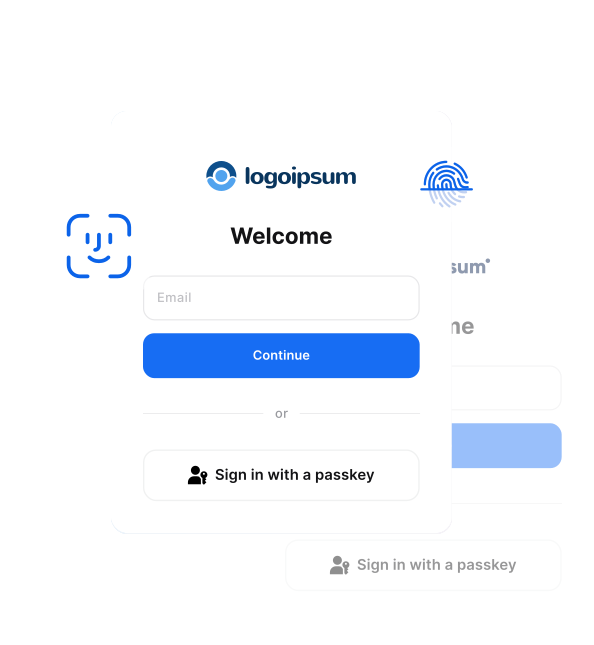
Biometric authentication Biometric authentication is a security process that verifies a user's identity based on their unique physical or behavioral characteristics. Instead of relying on traditional methods like passwords or PINs, biometrics leverages distinctive traits such as fingerprints, facial features, or voice patterns to confirm a person's identity.


Biometric Authentication Methods
Biometric authentication leverages various unique physical or behavioral characteristics for user verification. Let's focus on two of the most common and convenient methods: fingerprint authentication and facial recognition.
Fingerprint Authentication
Fingerprint authentication identifies individuals based on the unique patterns and minutiae present on their fingertips.


Biometric Authentication Flow
How does biometric authentication work? Below are the key steps in biometric authentication flow:
Key Generation
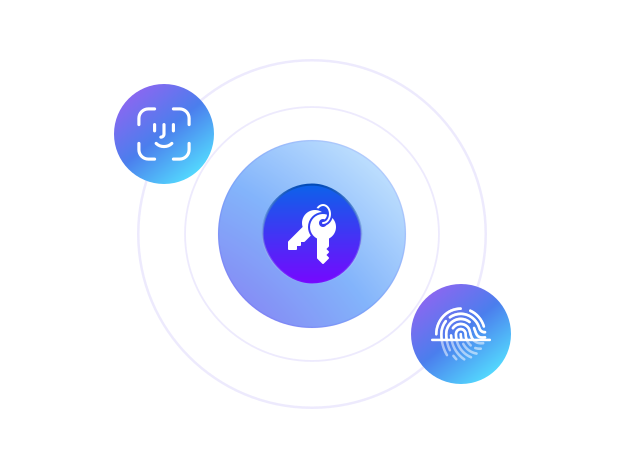
Upon registering biometric login, a pair of cryptographic keys is created by Secure Enclave, so the private key is protected by hardware and never left the device.
- The private key is securely stored on the user's device (Secure Enclave for iOS, Hardware-backed Keystore for Android).
- The public key is stored on the Authgear server.

Authentication
- The user presents their biometric (fingerprint or face) to unlock the device's private key.
- The server sends a challenge to the devices.
- The device uses the private key to sign the challenge.
- The signed challenge is sent to the Authgear server as a response.
Server Verification
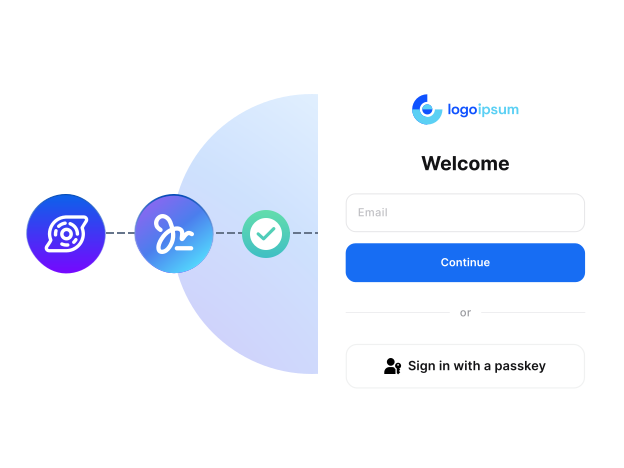
- The Authgear server verifies the digital signature using the stored public key.
- If the signature is valid, the user is authenticated.
Password vs. Biometric Authentication: A Comparison of Advantages and Disadvantages
How does biometric authentication work? Below are the key steps in biometric authentication flow:
| Feature | Password Authentication | Biometric Authentication |
|---|---|---|
| Security | Vulnerable to hacking, phishing, and brute-force attacks | Highly secure as biometric traits are unique to each individual and difficult to replicate or steal |
| Convenience | Requires users to remember and input complex passwords | Offers a seamless and user-friendly experience with no need to remember passwords |
| User Experience | Can be frustrating due to forgotten or incorrect passwords | Provides quick and easy access to services |
| Cost | Free with Authgear | Free with Authgear |
| Acceptance | Widely adopted but declining in popularity due to security concerns | Increasingly accepted and preferred by users |
Revolutionize Enterprise Security with Passkey Authentication
Discover how passkeys can transform your organization's security landscape. From enhancing employee productivity to safeguarding sensitive data, explore the compelling use cases of implementing passkey authentication in corporate environments.


