What Is CPaaS? A Developer's Guide to Communications APIs
CPaaS lets you add SMS, voice, WhatsApp, and OTP verification to your app through cloud APIs, without running any telecom infrastructure. Here's how it works, what it costs, and when to use it.
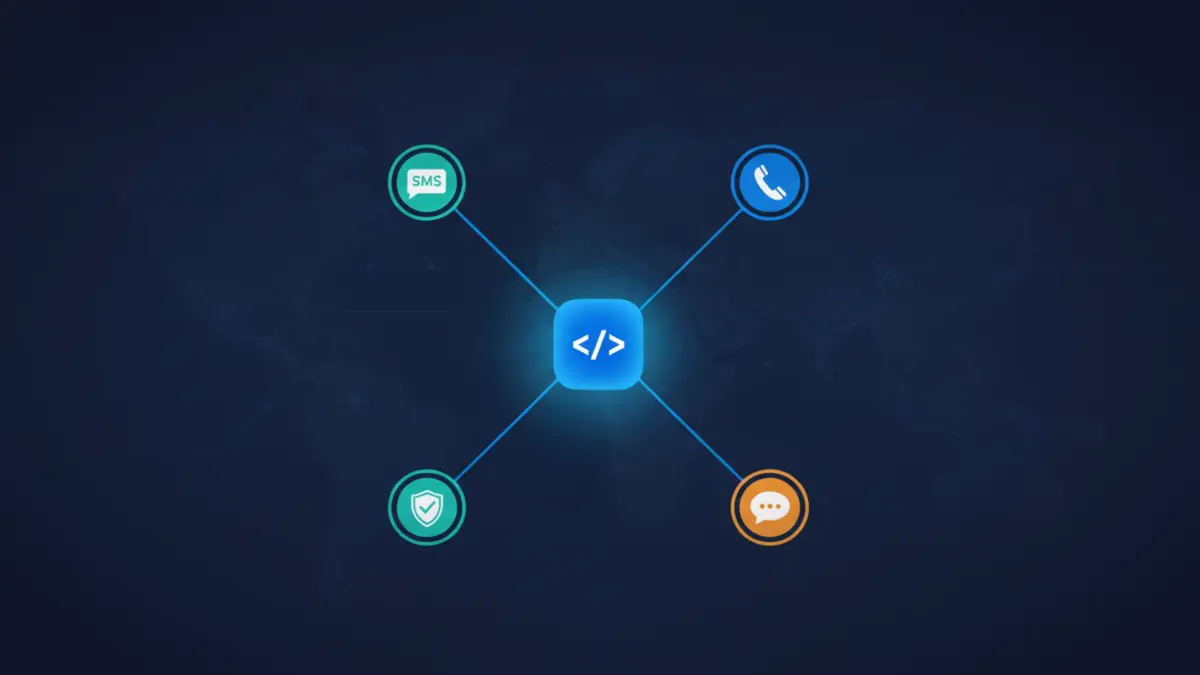
tl;dr: CPaaS (Communications Platform as a Service) is a cloud platform that lets you add messaging, voice, and OTP verification to your app through APIs, without owning any telecom infrastructure. You pay per message or per minute, and it’s how most apps send SMS, WhatsApp, and one-time passwords today.
If your app sends a login code by SMS, a shipping update by WhatsApp, or a reminder call, there’s a good chance a CPaaS sits behind it. It’s one of those acronyms that’s everywhere in developer tooling but rarely explained plainly. This guide fixes that: what CPaaS is, how it works, when to reach for it, and what it costs.
What is CPaaS?
CPaaS stands for Communications Platform as a Service. It’s a cloud platform that exposes communications (SMS, voice calls, video, chat apps like WhatsApp, and verification/OTP) as APIs your application can call.
The point is that you don’t have to become a telecom company to send a text message. Connecting directly to mobile carriers around the world is slow, expensive, and heavily regulated. A CPaaS has already done that integration work and rents it back to you as a few lines of code.
Think of it like electricity. You don’t build a power plant to run your fridge; you plug into the grid and pay for what you use. CPaaS is the grid for communications.
How CPaaS works
Under the hood, a CPaaS maintains connections to mobile carriers, messaging platforms (like the WhatsApp Business Platform), and voice networks across many countries. When your app makes an API call to send a message, the platform picks a route, hands the message to the right carrier or channel, and reports back whether it was delivered.
You interact with three things:
- APIs and SDKs: REST endpoints or language libraries for sending a message, placing a call, or starting a verification.
- A dashboard for managing numbers and sender IDs, and for viewing delivery logs and spend.
- Webhooks that notify your app of inbound messages, delivery receipts, and status changes.
You never touch a carrier contract, a SIM, or an SS7 gateway. That’s the whole value.
Common CPaaS use cases
- OTP and verification: one-time passwords for login and 2FA. Usually the highest-volume and most expensive use case on this list.
- Transactional notifications: order confirmations, shipping updates, appointment reminders.
- Marketing messages: promotions sent over SMS or WhatsApp, subject to consent rules.
- Voice and video: call center features, click-to-call, in-app video.
- Conversational messaging: two-way chat over WhatsApp, RCS, or SMS.
CPaaS vs SaaS, PaaS, and UCaaS
The “as a service” family gets confusing. Here’s how CPaaS fits:
| Model | What you get | Example |
|---|---|---|
| SaaS | A finished app you use as-is | A helpdesk or CRM |
| PaaS | A platform to build and run apps | App hosting platforms |
| CPaaS | Communications building blocks via API | Twilio, Vonage, Sinch |
| UCaaS | A ready-made unified comms product (calls, chat, meetings) | A cloud phone/meetings suite |
The short version: UCaaS is a product for your staff to use; CPaaS is a toolkit for your developers to build with.
What CPaaS costs
CPaaS pricing is usage-based, and this is where teams get surprised. There’s rarely a flat license fee. Instead you pay per unit:
- SMS: per message, priced by destination country, plus carrier surcharges.
- Voice: per minute.
- WhatsApp and other channels: per message or per conversation.
Because it scales with volume, a high-traffic use case like SMS OTP can quietly become one of your largest infrastructure line items. Per-message rates also vary enormously by country. We break the SMS side down in SMS API Pricing Explained, and you can estimate your own spend with the SMS cost calculator.
Choosing and using a CPaaS
A few things matter more than the headline price:
- Coverage and routing quality in the countries you actually send to.
- The channels you need: SMS, voice, WhatsApp, RCS, email.
- Deliverability: a cheap route that doesn’t arrive is expensive.
- Compliance: A2P registration and sender ID rules differ by market.
For verification specifically, cost is often the deciding factor, and SMS is the priciest channel. Many teams cut that bill by routing OTPs over WhatsApp with SMS fallback. See SMS OTP vs WhatsApp OTP and WhatsApp API Pricing.
Building all of this directly on a raw CPaaS means managing routing, fallback, and fraud protection yourself. Authentication platforms like Authgear sit on top and handle OTP delivery for you: WhatsApp-first messaging with automatic SMS fallback, plus SMS pumping protection. You get the communications without wiring the plumbing yourself.
Frequently Asked Questions
What is CPaaS?
CPaaS (Communications Platform as a Service) is a cloud platform that lets developers add real-time communications (SMS, voice, video, WhatsApp, and OTP verification) to their own apps through APIs, without building or operating telecom infrastructure. You pay for what you use rather than running carrier connections yourself.
What does CPaaS stand for?
Communications Platform as a Service. It follows the same “as a service” model as SaaS, PaaS, and IaaS, but the product is communications building blocks (messaging, voice, verification) delivered as APIs and SDKs.
What are examples of CPaaS providers?
Twilio, Vonage, Sinch, Bird (formerly MessageBird), Infobip, and Plivo are among the largest. AWS offers communications APIs too, under the AWS End User Messaging brand, which covers SMS, voice, and WhatsApp and also now powers SMS sent through Amazon SNS. Most providers charge per message or per minute.
What is the difference between CPaaS and SaaS?
SaaS gives you a finished application you use as-is (like a helpdesk or CRM). CPaaS gives you communications building blocks you embed into your own application via APIs. With CPaaS you control the product experience; the platform just handles message and call delivery underneath.
How much does CPaaS cost?
CPaaS is usage-based. SMS is billed per message by destination country, voice per minute, and channels like WhatsApp per message or conversation. There’s rarely a flat license fee, but costs scale with volume, so high-traffic use cases like SMS OTP can get expensive fast. Our SMS cost calculator estimates that spend.